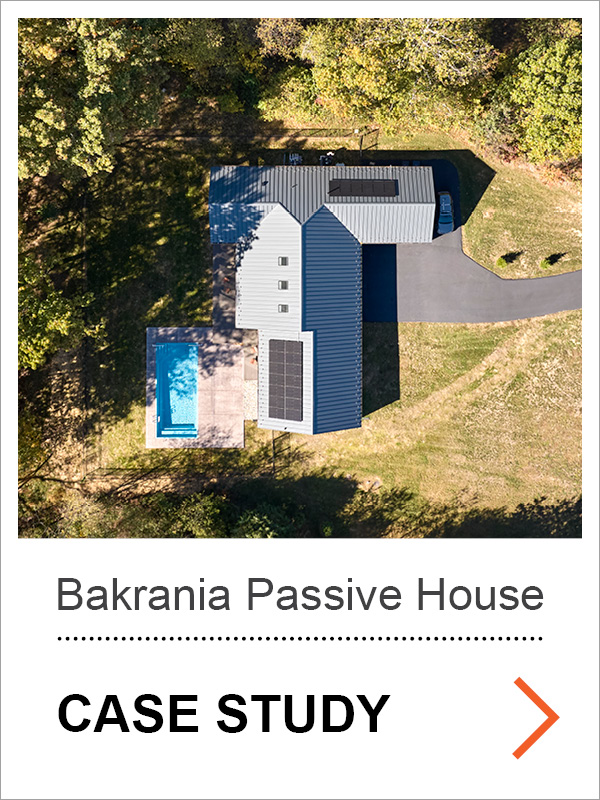

Bakrania Passive House
Location
Mullica Hill, NJ
Size
2,208 sqft
Status
Completed design
Years
2023
Bedrooms
3
Baths
2.5


1 RPA Bakrania
2 RPA Bakrania
3 RPA Bakrania
4 RPA Bakrania
5 RPA Bakrania
6 RPA Bakrania
7 RPA Bakrania
8 RPA Bakrania
9 RPA Bakrania
10 RPA Bakrania
11 RPA Bakrania
12 RPA Bakrania
13 RPA Bakrania
14 RPA Bakrania
RPA Bakrania Siteplan 052223
RPA Bakrania Firstfloor 052223
RPA Bakrania Northelevation 052223
RPA Bakrania Eastelevation 052223
RPA Bakrania Southelevation 052223
RPA Bakrania Westelevation 052223
RPA Bakrania Long Section 060623


STORY
DESCRIPTION
A minimalist home for a young family that values simplicity, openness, and outdoor living.Nestled in the Southwest New Jersey Pinelands, this compact house sits within a wooded natural landscape with excellent solar exposure for passive design.DESIGN
The design goal was an energy and space efficient family home, with open and reconfigurable spaces. Primary features of this home are its simple form, natural light, and partially covered outdoor living spaces. The materiality speaks to the clients’ minimalistic tastes, emphasizing modern lines with vertical cedar siding, and a metal roof. The open floor plan lends itself to a connected social environment, and the outdoor living areas create a calm and relaxing retreat.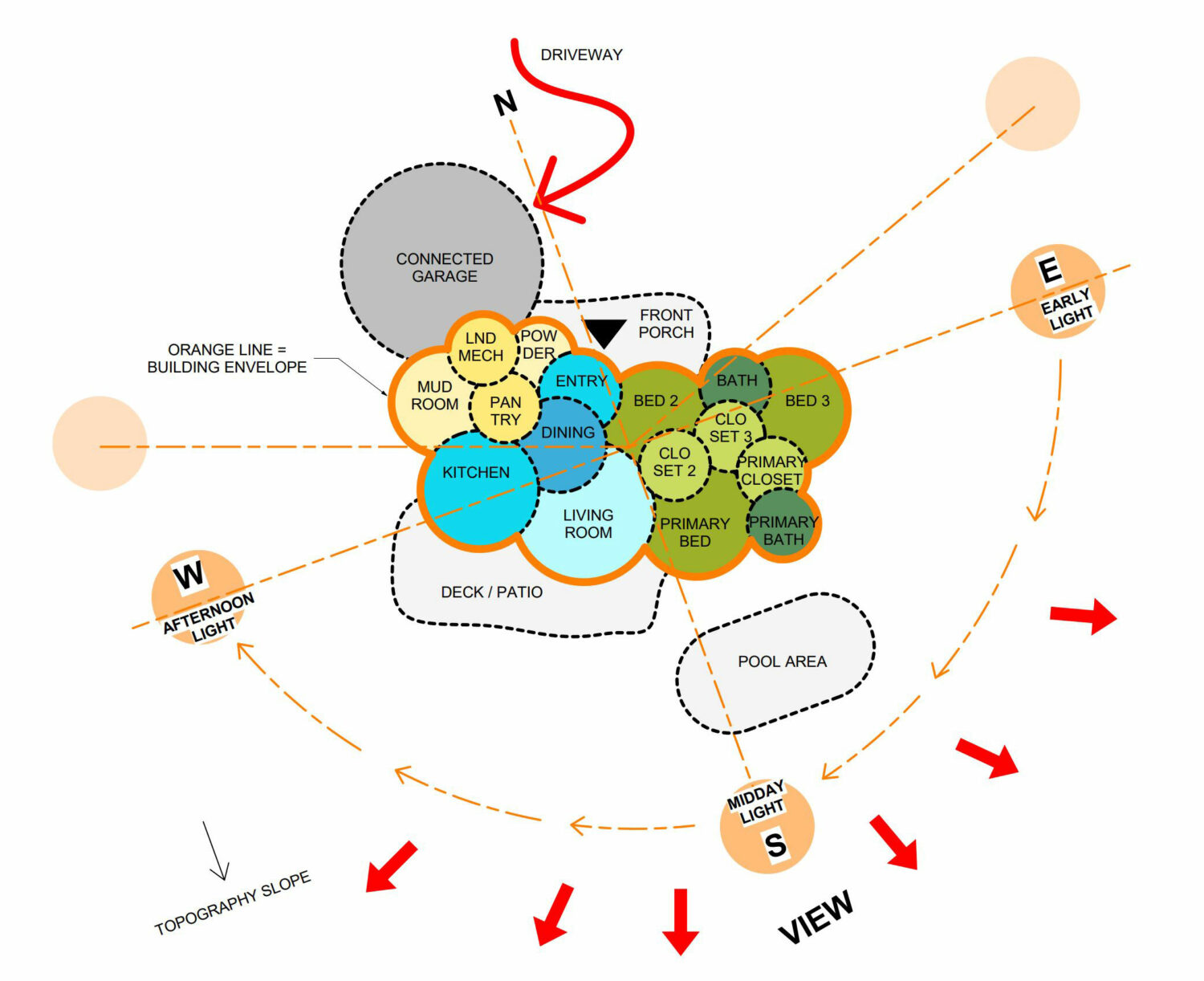
DETAILS
PROJECT INFORMATION
Project Type Single Family Residence Location Mullica Hill, NJ Climate Zone 4A Area 2,208 square feet Bedrooms 3 Bathrooms 2.5 Completed Design HERS Rating – On Site Renewables 5KW Roof Mounted PVKEY ELEMENTS
Site Undeveloped woodland Performance Standard Passive House certification Envelope R-30 Foundation R-40 Wall R-65 Roof Airtightness 0.60 ACH@50Pa Windows Mavrik Triple Pane Tilt Turn Inswing Mechanical Mitsubishi Heat Pump Zehnder ERV Hot Water Heat Pump Smart Home Controls Materials Metal Roofing Cedar SidingTEAM
RPA Project Team Richard Pedranti, AIA, CPHC, CPHD, CPHB, PHIUS + Michelle Sangster, CPHC General Contractor Under Construction Builders Structural Engineer PLACE Engineering, PLLC Certified Passive House Consultant Richard Pedranti, AIA, CPHD, CPHB, PHIUS + Photography Jeffrey Totaro | Architectural Photographer
CASE STUDY

CASE STUDY
In the embrace of a tranquil, wooded landscape in southern New Jersey, a striking contemporary residence emerges, a compelling narrative in the language of sustainable architecture. This is the story of Smitesh and Lopa Bakrania, whose vision for a comfortable, energy-efficient family haven—one that treads lightly on the earth—has come to fruition. Guided by the astute expertise of Richard Pedranti Architect (RPA) and meticulously brought to life by UCB Construction (UCB), their journey culminated in a breathtaking Phius-certified Passive House, a dwelling that not only embodies their deeply held values but also seamlessly facilitates their aspirations for modern living. The impetus for this new chapter began with a pragmatic desire: to alleviate Smitesh's time-consuming daily commute. "When we first settled in New Jersey, our location was a convenient midpoint for both our workplaces," Lopa reflects. "However, my transition to remote work rendered Smitesh’s hour-long drive increasingly inefficient." The enforced pause of the COVID-19 pandemic served to solidify their resolve, prioritizing precious family time above all else. Yet, the couple's aspirations extended far beyond mere convenience. Their interest in sustainable building practices had been ignited during the construction of their previous home. "I knew there had to be a more intelligent way to build," Smitesh, a mechanical engineer and professor of sustainability, recalls. His professional understanding of building science naturally drew him to the rigorous principles of Passive House design. "Ultimately, when I delved into the long-term implications of energy consumption, the Passive House standard consistently presented itself as the most compelling and responsible solution." Their appreciation for thoughtful, energy-conscious design was further cultivated through extensive travels across Europe and New Zealand. "We've been fortunate to explore many parts of the world," Lopa notes, "and in places like New Zealand, Spain, and France, we were consistently impressed by the meticulous attention paid to detail in residential design and construction—from the embrace of triple-paned windows to inherently efficient and practical layouts."Finding the Perfect Partner in Vision
The Bakrania family's pursuit of a like-minded architect led them to Richard Pedranti’s eponymous firm through a targeted online search. "My initial foray began with a simple Google query for Passive House architects in New Jersey," Smitesh explains. "An article showcasing one of RPA’s distinctive homes immediately captured my attention." RPA's portfolio, characterized by its clean lines and modern, minimalist aesthetic, resonated deeply with the couple's own design sensibilities. "The uncluttered forms and European-inspired simplicity spoke directly to our preferences." "What truly set Richard apart was our very first phone conversation," Smitesh recounts. "He immediately engaged in a detailed and insightful discussion about the intricacies of the project. It was clear from that moment that he possessed the understanding and passion we were seeking." Lopa, with her extensive background in the exacting world of pharmaceutical process chemistry, brought a valuable scientific lens to the endeavor. "As a scientist, I inherently value rationale and evidence-based justification," she explains. "Richard's approach, his deep understanding of the 'why' behind every design decision, and his unwavering commitment to lifelong learning resonated profoundly with me." She adds, "His passion isn't expressed in a superficial manner, but rather in the profound depth of his thought and comprehensive understanding."Site as Symphony: Selection and Design
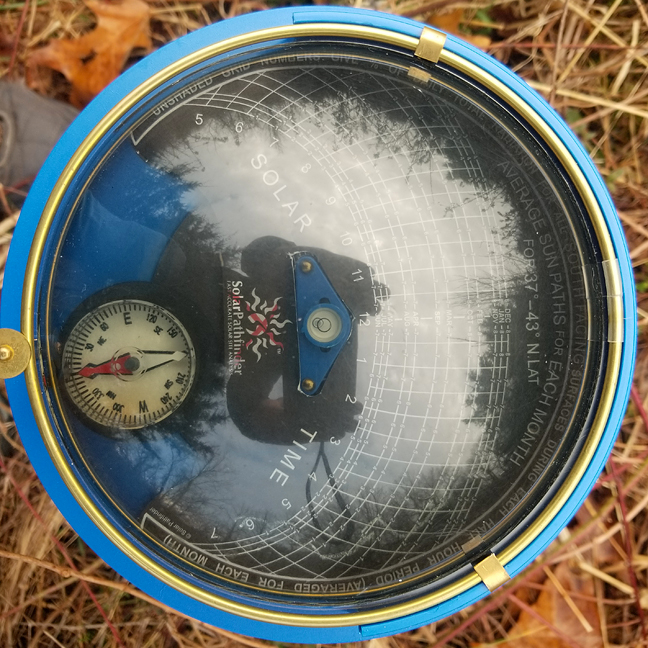
The selection of the building site was intrinsically linked to Passive House principles. "Our focus naturally shifted to south-facing lots that would maximize passive solar gain," Smitesh explains. "This led us to prioritize parcels with a north-facing entry, ensuring the south facade remained unobstructed for optimal solar considerations." Lopa adds, "We also sought a sense of privacy, a tranquil wooded setting, and a site that would necessitate minimal environmental disruption during the construction process." "Our design journey commenced with Richard’s thoughtful ‘respond and react’ methodology," Smitesh recalls. "He initiated the process by asking us to complete a comprehensive questionnaire outlining our specific needs and desires, which served as the bedrock for our collaborative exploration."
The ensuing process was fluid and iterative, with Richard presenting design concepts and the couple providing insightful feedback, collectively shaping the home's ultimate form and features. Lopa observed that Richard possessed an exceptional ability to intuit their unspoken preferences and translate them into a design that harmonized perfectly with their evolving vision.
RPA also skillfully navigated budget considerations through thoughtful value engineering. "Budgetary realities led us to thoughtfully transition from an initial flat roof design to a more cost-effective gable roof," Smitesh notes. "We also refined room dimensions and adjusted certain exterior details. However, the fundamental layout, the very essence of RPA’s initial design, remained remarkably intact."
"Our design journey commenced with Richard’s thoughtful ‘respond and react’ methodology," Smitesh recalls. "He initiated the process by asking us to complete a comprehensive questionnaire outlining our specific needs and desires, which served as the bedrock for our collaborative exploration."
The ensuing process was fluid and iterative, with Richard presenting design concepts and the couple providing insightful feedback, collectively shaping the home's ultimate form and features. Lopa observed that Richard possessed an exceptional ability to intuit their unspoken preferences and translate them into a design that harmonized perfectly with their evolving vision.
RPA also skillfully navigated budget considerations through thoughtful value engineering. "Budgetary realities led us to thoughtfully transition from an initial flat roof design to a more cost-effective gable roof," Smitesh notes. "We also refined room dimensions and adjusted certain exterior details. However, the fundamental layout, the very essence of RPA’s initial design, remained remarkably intact."
 Crafting the Vision: The Construction Process
The selection of UCB as the general contractor was driven by their genuine interest and proactive approach to understanding the intricacies of Passive House construction. Their eagerness to embrace the project's unique demands proved to be a key differentiator. "Richard's discerning eye in recognizing a contractor’s authentic commitment, as opposed to mere overconfidence, was invaluable," Lopa explains. "He expertly guided us toward UCB, who have proven to be an exceptional and collaborative team."
"Pandemic-related delays, particularly those affecting the supply chain for the specialized windows, presented challenges to the project timeline," Smitesh shares. "However, throughout the entire process, we were consistently impressed by UCB's unwavering professionalism and their genuine commitment to a true partnership." Lopa further highlights UCB's exceptional willingness to accommodate their needs, even allowing them to move into the residence before the final touches were completed.
Life Within: A Sanctuary of Well-being
Living within their completed Passive House has proven to be a transformative experience for Smitesh and Lopa. "Looking out my window each morning," Lopa muses, "I often feel a sense of disbelief, as if this experience is almost too idyllic to be real." Passive House design places a paramount emphasis on creating healthy indoor environments. The continuous supply of filtered fresh air significantly reduces the ingress of dust, pollen, and other airborne pollutants. The home's airtight construction, coupled with a meticulously balanced ventilation system, ensures superior indoor air quality through the constant exchange of interior air, effectively removing moisture and unhealthy contaminants. This sophisticated system also empowers residents to easily customize their indoor air quality by selecting filters tailored to their specific medical needs. "Our son has asthma, and we've observed a significant reduction in the frequency and severity of his episodes since we moved here," Lopa notes with heartfelt relief.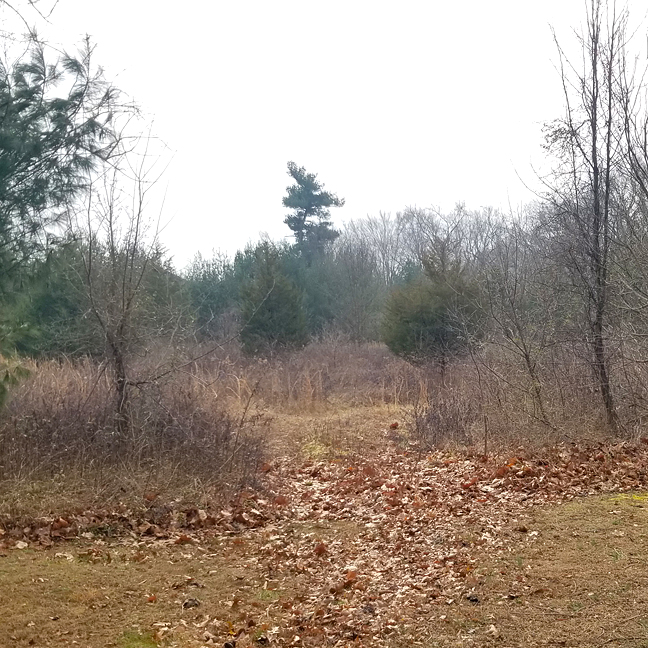
Final Reflections: Wisdom for the Sustainable Journey
Reflecting on their journey, Smitesh and Lopa offer invaluable insights for those contemplating the path of Passive House construction:- Budget with Foresight: Recognize that Passive House construction typically involves a higher initial investment, but the long-term energy savings and profound health benefits represent a substantial return.
- Partner Wisely: Seek out an experienced Passive House architect and builder who not only possess the requisite expertise but also genuinely share your vision and values.
- Communicate Openly and Often: Foster clear and consistent communication with your design and construction team throughout every phase of the project.
- Embrace Decisiveness: "Don't become the bottleneck," Lopa advises. "Develop a clear understanding of your preferences and make timely decisions to keep the momentum flowing."
- Focus on Enduring Value: "While the unique aspects of this approach might initially capture attention," Lopa observes, "it's the long-term benefits—from exceptional energy efficiency to demonstrably cleaner air—that are truly invaluable."
MORE
RELATED CONTENT